The Western Highlands Agriculture and Forestry Science Institute (WASI) has just published its August 2026 field assessment across plantations in Vietnam, Laos, and Cambodia, highlighting promising results. This data provides clear validation for the concrete advancements in HAGL’s 20,000-hectare coffee strategy (HAGL).
Positive signs from the plantations – Coffee yield projected to exceed target by 20%
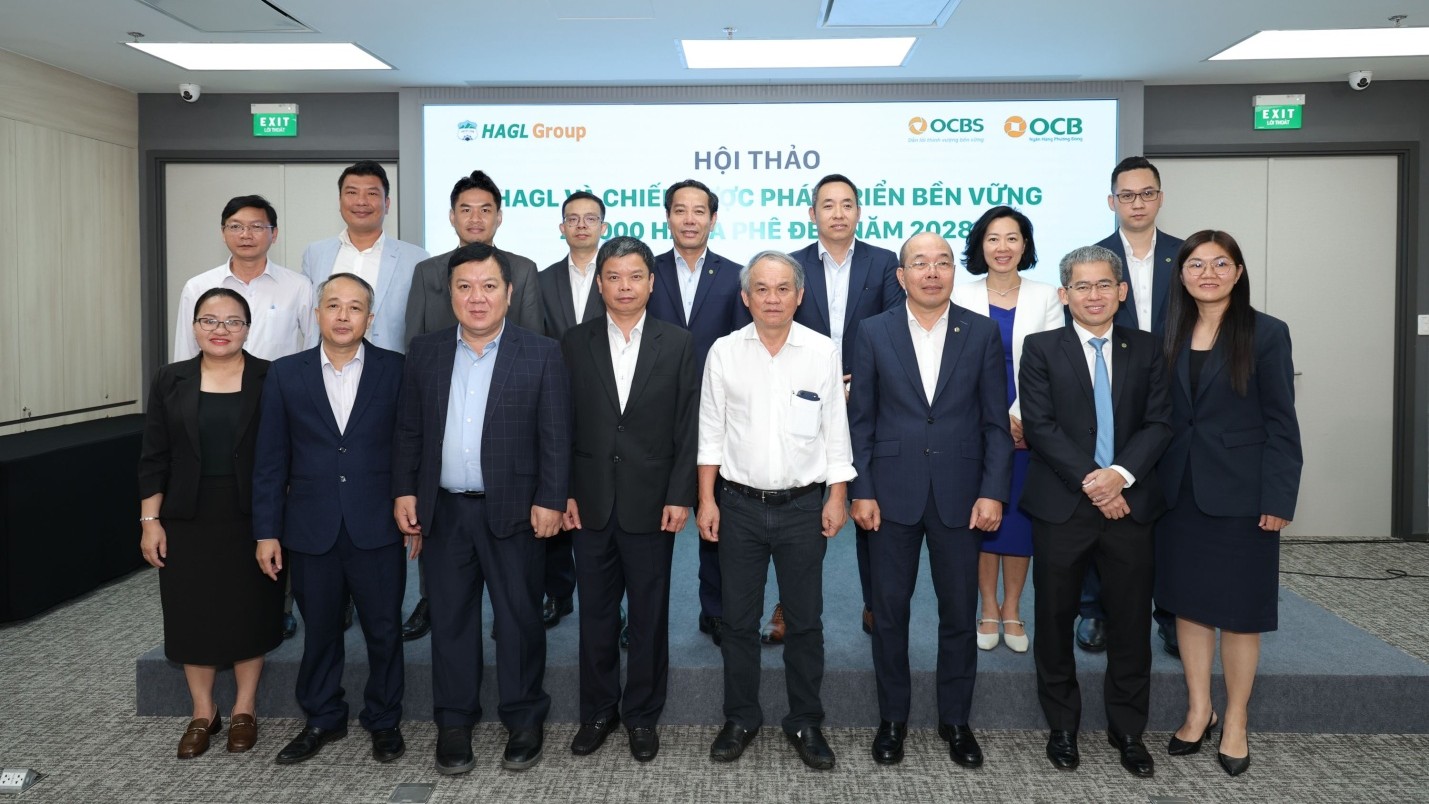
WASI’s field assessment was conducted in August 2026 — five months after the conference 'HAGL and the Sustainable Development Strategy for 20,000 Hectares of Coffee by 2028.' Hosted in Ho Chi Minh City by HAGL Group in collaboration with OCB Bank and OCBS Securities, the event drew significant attention from numerous organizations, enterprises, and investors.
Specifically, the technical team carried out direct field assessments across growing regions in Gia Lai, Champasak, Attapeu (Laos), and Stung Treng (Cambodia). The findings indicate robust growth of coffee plants across all locations. A standout example is Paksong (Laos), fueled by the nutrient-rich basaltic soil and the cool conditions of the Bolaven Plateau, the Arabica coffee plants planted just recently in April 2025 are flourishing, rapidly reaching 12-15 pairs of branches.
In Gia Lai, the Arabica coffee intercropped within rubber plantations since May 2025 has attained heights of 80–100 cm, averaging 10–14 pairs of primary branches. For the 2026 crop, approximately 15–20% of the trees have begun bearing fruit, a rate that aligns perfectly with the physiological traits of trees just over one year old.
Meanwhile, the Robusta and Liberica growing areas in Attapeu (Laos) and Stung Treng (Cambodia) also demonstrate excellent adaptability to their local natural conditions.
Notably, the projected yield is significantly exceeding initial expectations. HAGL previously set a green bean yield target of 4.7 tons per hectare, equivalent to 1 kg per tree. However, WASI projects that even during the first major harvest in 2027, each tree could yield 7.2 kg of fresh cherries. Even when applying a conservative conversion ratio (6 kg of fresh cherries to 1 kg of green beans), the green bean output would still reach approximately 1.2 kg per tree, exceeding the target by 20%. This is an exceptionally promising sign, given that Arabica coffee typically takes 4 to 5 years to enter its stable production phase.
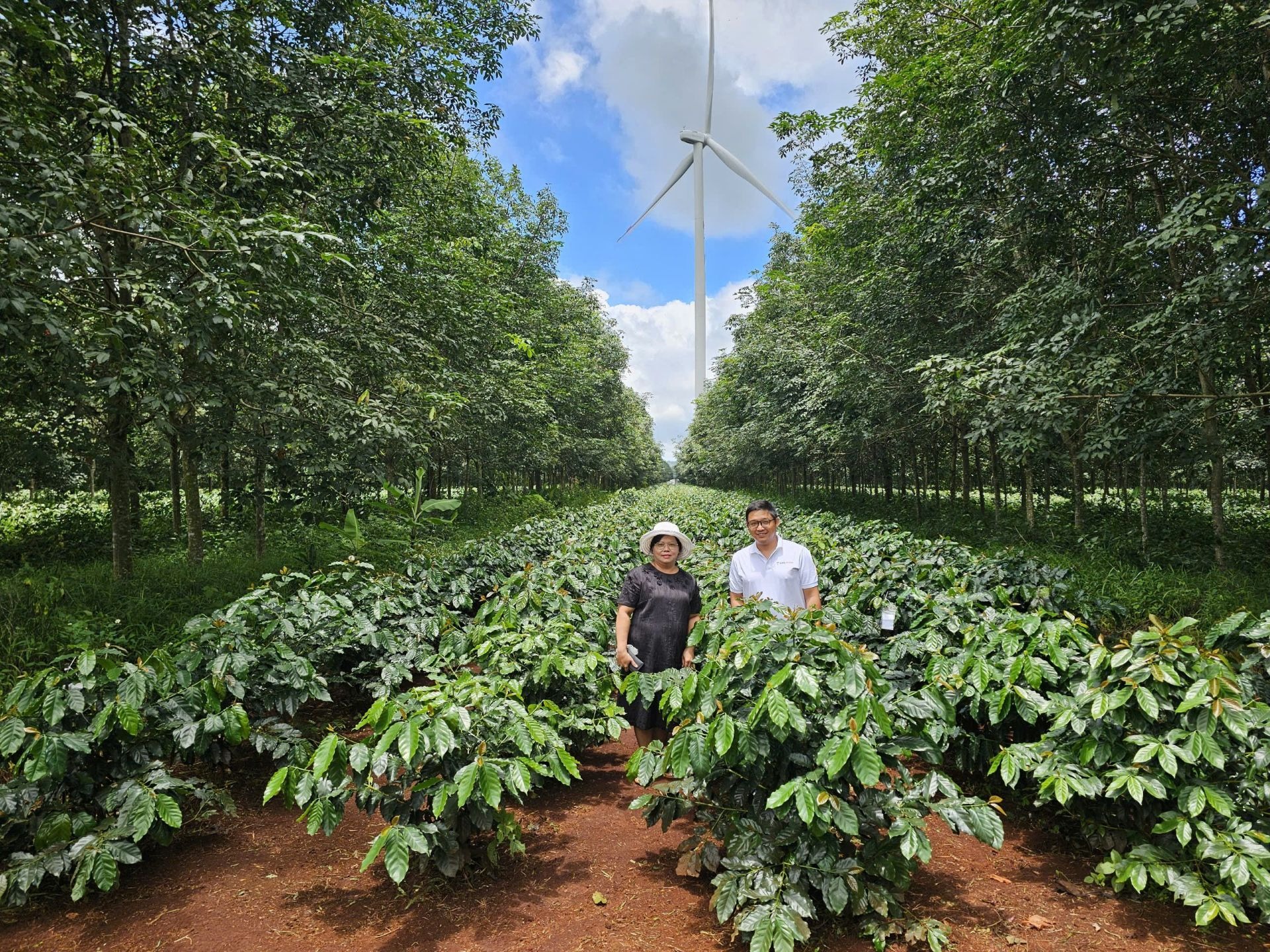
Arabica coffee at Hoa Binh plantations (Gia Lai).
From the field to the capital market: Catching the IPO Wave: HGI – HAGL’s Core Business
Under the new agricultural development strategy, HAGL aims to develop 20,000 hectares of coffee across Vietnam, Laos, and Cambodia by 2028. The company completed approximately 3,000 hectares in 2025, deployed an additional 7,000 hectares in 2026, and plans to expand by 5,000 hectares annually during the 2027–2028 period to achieve this target.
The total capital requirement for the 2026–2028 period is approximately VND 14,220 billion. This will be funded through multiple sources, including HAG bond issuance, retained earnings for reinvestment, medium-term capital, and the planned Initial Public Offering (IPO) of Hoang Anh Gia Lai International Investment Joint Stock Company (HGI) in 2026.
HAGL’s financial position also shows an improving trend. Revenue grew from VND 2,097 billion in 2021 to VND 7,441 billion in 2025, while profit after tax surged from VND 128 billion to VND 2,243 billion.
The debt-to-equity ratio dropped from 0.75x in 2024 to 0.56x in 2025 and further decreased to 0.5x as of June 30, 2026. This reduction occurred despite higher borrowing to keep pace with the plantation expansion—demonstrating that area expansion is well-balanced with financial leverage control.
As part of HAGL’s overall strategy, HGI is positioned as a key subsidiary to develop plantations in Laos. The goal is to reach over 6,300 hectares of coffee by 2028, making up roughly one-third of the Group’s total scale.
The plan to IPO and list HGI is also a key part of the capital-raising strategy for 2026–2028. Notably, the WASI field assessment in August 2026 confirmed positive growth across HGI’s coffee plantations in Laos.
Under the offering plan, HGI will issue 18.8 million shares at VND 60,600 per share, bringing the total offering value to VND 1,139 billion. Investors can register and pay their deposit until 5:00 PM on September 21, 2026, either through the OCBS Invest app or in person at OCBS branches - the main advisor and distributor for the HGI IPO.

OCBS serves as the main advisor and distributor for the HGI IPO
Based on the field findings from WASI’s report, investors now have positive information to make informed investment decisions. From the coffee plants taking root to the expansion and capital-raising plans, HAGL is steadily transforming the 20,000-hectare strategy from a long-term vision into a reality one backed by solid data, a clear roadmap, and promising real-world results.